From Myanmar to Hangar 2: Aaron Jay Is Building a Career That Saves Lives
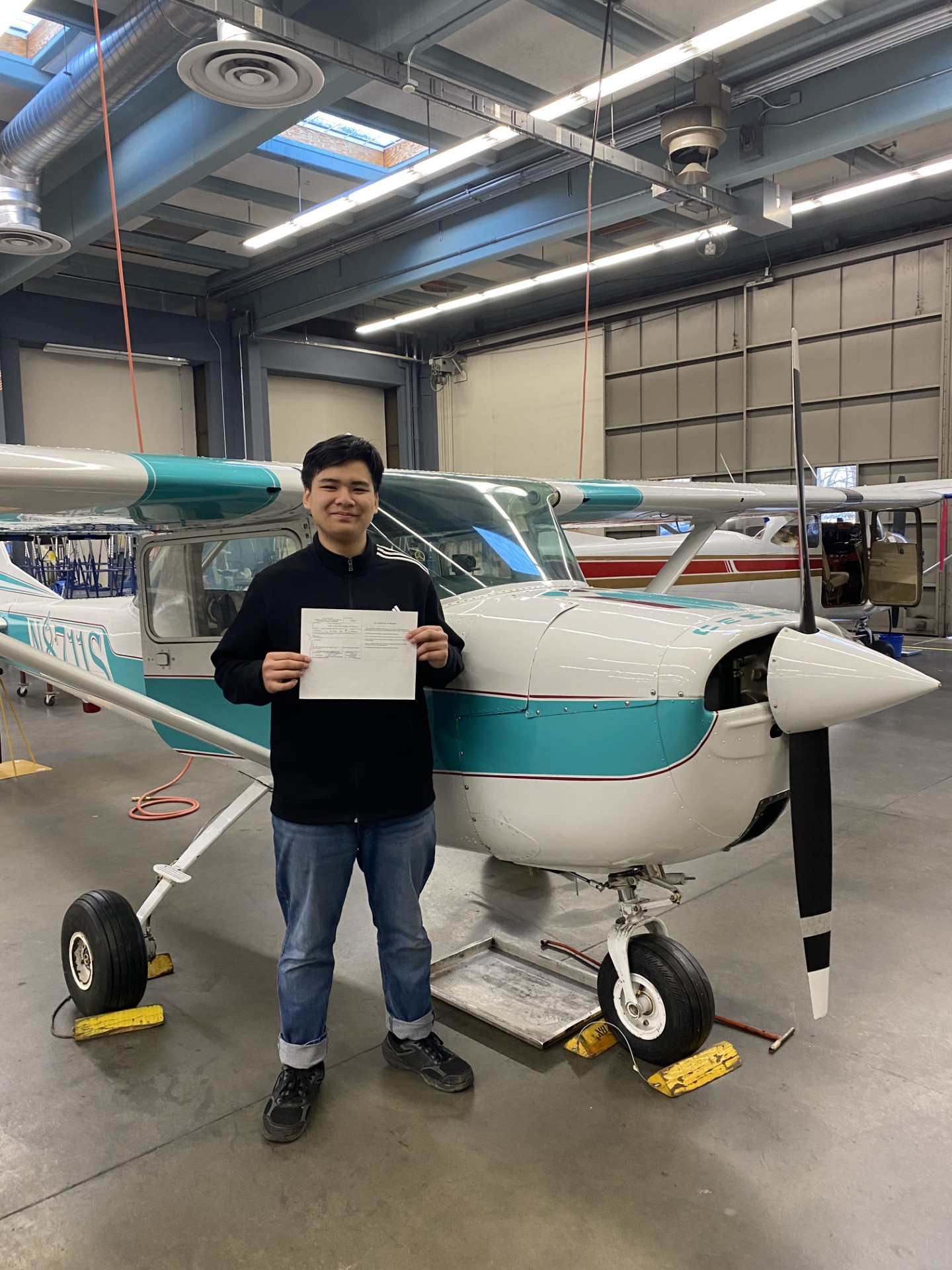
When his grandfather's medicine couldn't get through by road, Aaron Jay saw exactly what he wanted to do with his life.
Aaron Jay didn't grow up dreaming about airplanes. He grew up watching them do something much more urgent: save people's lives.
Aaron's family is from Putao, a mountainous town in northern Myanmar where getting medicine and supplies through by land can be extremely difficult. For Aaron, that difficulty became personal while he was volunteering there and watched vital medication for his grandfather's dementia get delayed for weeks because of local conflict. Then a 7.7 magnitude earthquake tore through the region's already fragile roads, and it became clear that planes weren't just a convenience. They were often the only way in.
“I realized that airplanes are the only reliable lifeline to help disadvantaged communities,” Aaron says.
Myanmar doesn't have formal aviation maintenance training, so learning to keep those planes running meant leaving home. That search for training led Aaron across an ocean, to South Seattle College's Aviation Maintenance Technology (AMT) program, where he's now working toward the credential that will let him do exactly what he set out to do: keep aircraft flying.
Landing in Washington's aviation hub
When Aaron was weighing where to study, South Seattle College's location made the decision easy at first. The campus sits close to Seattle and Sea-Tac Airport, in a state that's home to some of the world's leading aircraft manufacturers.
“What initially drew me to the program was its close proximity to Seattle and Sea-Tac Airport, along with being in Washington, which is home to many of the world's leading aircraft manufacturers,” Aaron says.
Location got him in the door. The coursework is what kept him there. As part of the program, students fabricate ailerons from scratch and completely overhaul real GSO-480 aircraft engines, hands-on work that Aaron says goes far beyond what he expected walking in.
A credential that opens almost any hangar door
The AMT program prepares students to become certified Airframe and Powerplant (A&P) mechanics, a credential that qualifies graduates to work on nearly anything with wings, from the small Cessna 150s and 172s parked in Hangar 2 to Boeing 777s and even satellites headed for space. It's a wide-open door at a time when the industry needs it most. Aviation is short on the mechanics who keep planes in the air, and with companies like Boeing, Alaska, and others in the area continuing to grow and evolve, the need for more mechanics is very real.
“Frankly, this means you will not have a hard time finding a job after you earn your certificate,” Aaron says.
From tow bars to turbine engines
To become a certified A&P mechanic, students must pass FAA written, oral, and practical exams in three areas: General, Airframe, and Powerplant. Students don't test in all three at once. They sit for each set of exams in stages, as they complete that portion of the program. Aaron has already passed his General and Airframe exams and earned his Airframe certificate. He's set to test for Powerplant after next quarter, the final step before he's fully certified.
The General portion covers the fundamentals: how to attach a tow bar, safety-wire aircraft parts, splice wires for aircraft electrical systems, and calculate an aircraft's weight and balance. Then comes Airframe, where the work turns hands-on. One of Aaron's most memorable projects had him fabricating a section of an aileron, similar to the ones on the Cessnas in Hangar 2, from scratch. The project took three weeks, since every rivet placement had to be designed before a single hole was drilled. Students in that phase also work with de-icing boots; the black rubber strips visible on the wings of the JetStar in Hangar 2.
Aaron is currently finishing the Powerplant portion of the program, learning how aircraft engines generate enough power to lift massive metal boxes into the sky. Recently, his class completely overhauled a GSO-480, one of the blue engines on display in the first hangar, taking it apart piece by piece, inspecting every component, and rebuilding it. They also overhauled a carburetor, installed it, and ran the engine to confirm it worked. He'll sit for his Powerplant test after next quarter; the last credential he needs to be a fully certified A&P mechanic.
“Being able to completely rebuild a piece of equipment and successfully test it is really something,” Aaron says.
A program that feels like family
For Aaron, the technical training is only part of what makes the program work. The instructors are experienced technicians who have worked for companies like Delta, Alaska, and Boeing, and he describes them as approachable and always willing to help. He's also found ways to give that support back. Aaron currently works as an Aviation Maintenance Tutor in the college's tutoring office, helping fellow students work through tough technical material.
Outside the classroom, Aaron took part in an Aviation Mechanic Mentorship program hosted by Alaska Airlines, where he got a firsthand look at daily mechanic operations and built connections with industry professionals. And because AMT students take every class together for two full years, the cohort itself becomes a kind of support system.
“The students here rely on each other like family,” Aaron says.
Aaron will graduate from SSC with an Associate's degree in Aviation Maintenance Technology, alongside his A&P certification. From there, he plans to transfer to Central Washington University this fall to continue building on the foundation he started in Hangar 2.
It's a long way from Myanmar to a hangar in West Seattle. But the thread connecting them is the same one that started it all: a plane, carrying something a community needed, and someone determined to make sure it kept flying.
Prospective Aviation Maintenance Technology Students: Fall 2026 classes are full. Please review our FAQ for additional program information, including prerequisite classes you can take now and how to join a waitlist. Thank you for your interest.