Aircraft Mechanic Training in Seattle: One Veteran Alum's Story
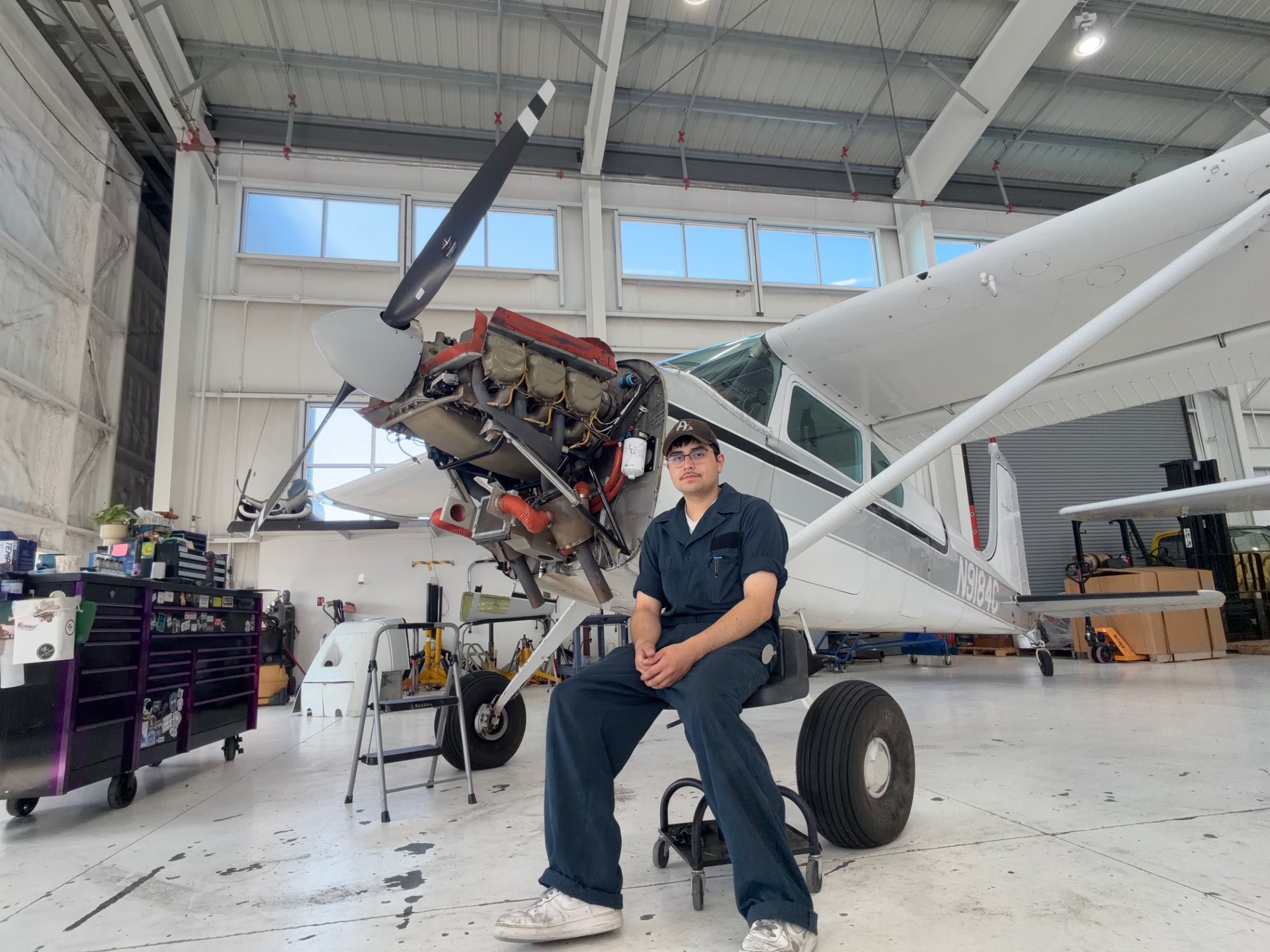
When Jason Mercado was serving in the Navy, he spent countless hours on the Landing Signal Officer platform, watching flight operations unfold. That daily exposure to aviation sparked something that would shape the rest of his career. "Just being around aviation every day was exciting to me," Jason says. "That's what made me want to stay around aircraft after I got out."
After leaving the service, Jason enrolled in South Seattle College's Aviation Maintenance Technology (AMT) program, drawn not just by the subject matter, but by the hands-on nature of the work. "I enjoy troubleshooting, working on different airplanes, and working with my hands," he explains. "There's something really rewarding about taking apart an airplane or an engine, fixing it, putting it back together, and then seeing that airplane fly again. It gives you an instant sense of pride in the work you did."
Choosing South Seattle College
Jason chose South Seattle College because of the support system in place to help him achieve his dream. "Once I started, Veterans Services, Financial Aid, and Workforce were a huge part of helping me succeed and get through the program," he says. Veterans Services helped him navigate his GI Bill benefits, Financial Aid connected him with a scholarship, and Workforce helped him get tools he still uses on the job today.
"I honestly don't think I would have finished the program without that support," Jason reflects. "It would have been much harder, and I probably could have ended up dropping out."
Lessons from the Navy
Jason's military background shaped more than just his interest in aviation. It shaped his entire approach to learning and a strong work ethic. "One of the biggest things the Navy taught me was not to get complacent, because that's how accidents happen," he says. "On the flight deck, everyone always said to keep your head on a swivel and pay attention to your surroundings. I carried that mindset with me into aviation maintenance."
The Navy also taught him how to manage stress and stay focused under pressure, along with a habit that has served him well in the hangar: asking questions. "I'd rather ask ten questions about the same thing than make one mistake," he says.
Still, the shift from military life to college wasn't easy. "The transition from the military to college was really hard for me," Jason admits. "The biggest adjustment was getting used to going to school in general. I also didn't really understand how to use my GI Bill or financial aid when I first started." Once again, it was the South Seattle College campus support network that helped him find his footing.
Hands-On Learning That Stuck
Throughout the program, Jason gravitated toward troubleshooting, sheet metal projects, and the powerplant coursework. "I preferred the hands-on work, and there was a lot of that throughout the course," he says. He credits the program's instructors for being consistently helpful, and points to the inspection portion of the program and safety wiring as two areas where his confidence really grew. One skill has stuck with him well beyond the classroom: "One of the most useful things I learned was how to look up the correct information in a parts catalog. That's something I still use at work now."
Landing the Job Before He Even Had His License
Jason's start at a regional airport came in an unexpected way, during one of his Airframe and Powerplant (A&P) written exams. "The front desk staff asked me if I was looking for work, and when I said yes, they brought me on as an apprentice," he recalls.
Starting the job before earning his license turned out to be a major advantage. "It reinforced what I was learning and helped me do really well on my written, oral, and practical exams," he says. It also came with a steep learning curve. "At first, it was pretty nerve-wracking because I wasn't just working on school projects anymore. I was inspecting and repairing someone's actual airplane. At the same time, it was very informative, and I learned a lot from being around the senior mechanics."
Those senior mechanics helped Jason bridge the gap between classroom theory and real-world practice and passed along wisdom he still carries with him. "One thing the senior mechanics always told me is that the license lets you do the work, but in reality, it's a license to learn," he says. Another lesson has stuck with him from an instructor: "Cars can pull over when they have a problem, but airplanes can't."
Earning His A&P Certification
South's AMT program prepares students to take their FAA Airframe and Powerplant exams, the final step in becoming an aviation mechanic. Jason created a routine, with two weeks of preparation for each exam. "I had studied so much and really wanted to pass," he says.
The preparation paid off. When he found out he'd passed, the feeling was pure relief and joy. The first person he told was his girlfriend, Jennifer.
Looking Ahead
Completing the two-year AMT program is what Jason is most proud of, no small feat considering his daily commute. Living on the other side of Puget Sound meant taking the ferry to get to campus consistently throughout the program.
Looking to the future, Jason plans to stay in general aviation for now. "I feel like you get to do a lot more and work on a wider variety of things than you might at the airlines," he says. That said, he hasn't ruled out the airline path down the road, and he's set his sights on eventually earning his Inspection Authorization.
For Veterans who are getting out and feeling unsure of what's next, Jason's advice is simple: look into a trade. "It gives you a skill, a more secure career path, and it can help give you a sense of purpose again."
And for anyone questioning whether they can complete the program and become an aviation mechanic? "I'd tell them it's worth it. It's a lot of fun and cool knowing there are few people who can say they're aircraft mechanics. It's definitely a unique experience."
South Seattle College's Aviation Maintenance Technology program prepares students for FAA Airframe and Powerplant certification through hands-on training. Prospective Aviation Maintenance Technology students: Fall 2026 classes are full. Please review our FAQ for additional program information, including prerequisite classes you can take now and how to join a waitlist.