Plate Up: South to Host Korean Hansang Cooking Competition
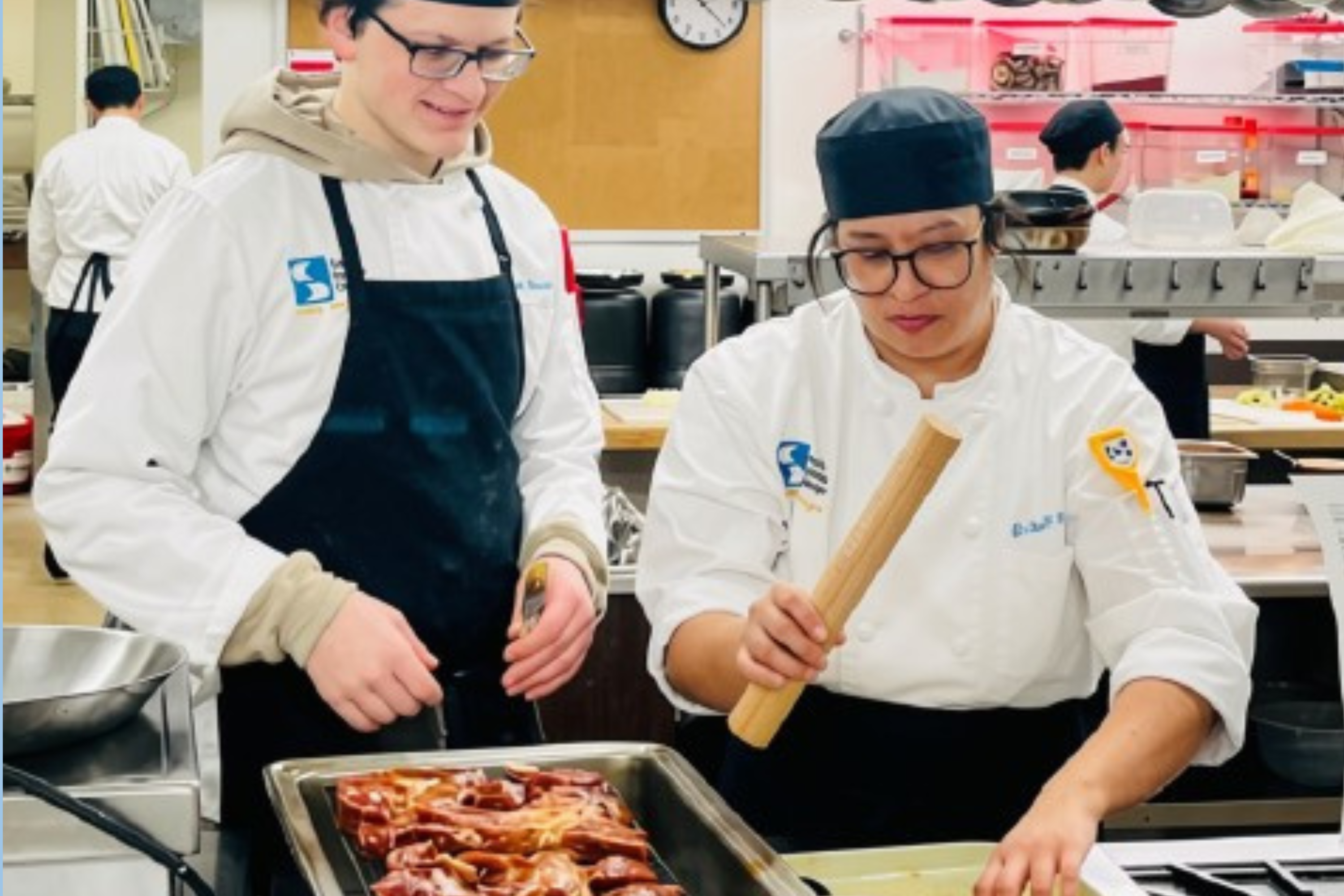
Grab your apron and get ready, because South Seattle College is about to turn up the heat. This fall, our Culinary Arts program is hosting the 2026 K-Seafood Hansang Cooking Competition, a brand-new event that challenges student teams to create a modern Korean Hansang using Korean seafood and ingredients. Think teamwork, technical skill, creativity under pressure, and a serious shot at learning from chefs featured on Netflix's Culinary Class Wars.
We sat down with Culinary Arts instructor MoonKu Jun, the mastermind behind the competition, to talk about what students can expect, why Hansang is the perfect format for showcasing Korean seafood, and what he hopes every student walks away with.
What Exactly Is a Hansang?
If you're not familiar with the term, here's your first lesson. "Hansang" (한상) literally means a full table or a complete meal served together. It's not about nailing one standout dish. It's about balance.
"In Korean food culture, it's not just about one main dish. It's about creating balance and harmony between rice, soup, side dishes, proteins, vegetables, and different flavors and textures," MoonKu explains.
That's exactly why he chose it as the competition format. Teams won't just be making a single seafood dish and calling it a day. They'll need to think about how every element on the table works together as one cohesive meal.
Each team will be required to incorporate three Korean seafood staples: frozen oysters, dried anchovies, and seaweed. Simple ingredients, endless possibilities. "The required seafood ingredients can be used in many different ways, so I'm really looking forward to seeing what the students come up with," MoonKu says.
More Than Just Cooking Skills
Sure, technical skill matters. But according to MoonKu, this competition is going to test a whole lot more than knife work and plating.
"Honestly, all of them! Technical cooking skills are definitely important, but creativity and teamwork will be just as important," he says. With a limited amount of time on the clock, teams of three will need to communicate, divide tasks, manage the clock, and support each other under real competition pressure.
And MoonKu isn't looking for students who can simply follow a recipe. He wants to see original thinking. "I want them to understand the ingredients, Korean flavors, and the idea behind Hansang, and then bring their own creativity and culinary background into the final presentation."
A Once-in-a-Lifetime Bonus: Cooking With Culinary Class Wars Chefs
Here's where things get really exciting. All five finalist teams will be invited to a special hands-on cooking session the day after the final competition, led by chefs connected to Netflix's hit show Culinary Class Wars, joining as part of the CJ Cuisine.K team.
This isn't a watch-from-the-back demonstration. Students will be cooking side by side with professional Korean chefs.
"Students will be able to cook alongside the chefs, learn Korean cooking techniques, ask questions, and get a closer look at how professional Korean chefs approach ingredients, flavor, presentation, and menu development," MoonKu says. "I think this will be a very special experience for our students."
The Details
Ready to see it all laid out? Here's what teams need to know:
Team size: 3 students per team
Application deadline: October 16
Preliminary round: October 22
Final competition: November 5 (Open to Public)
CJ Cooking Session with student teams: November 6 (Open to Public)
CJ Cooking Sessions with Instagram and YouTube Influencers: November 7th
Finalist teams: 5 teams advance to the final round
Prizes:
1st Place: $1,000 + CJ Certificate
2nd Place: $300 + CJ Certificate
3rd Place: $100 + CJ Certificate
It's Bigger Than the Prize Money
Yes, everyone wants that $1,000 grand prize. MoonKu will be the first to admit it, laughing, "Of course, everyone wants to win the $1,000 first prize!"
But he hopes students see the bigger picture. "They'll have the chance to challenge themselves, work as a professional team, experience competition pressure, meet chefs and industry professionals, and learn more about Korean cuisine and seafood," he says. "Even if they don't win, I hope they walk away more confidently in their skills and with some new ideas about where culinary arts can take them."
What MoonKu Is Most Excited About
After months of planning, what is MoonKu personally looking forward to? Watching his students shine.
"We can teach techniques and recipes in class, but an event like this gives students a chance to take what they've learned and make it their own," he says.
He's also excited about the connections this event will create, bringing students face to face with the CJ Cuisine.K team, visiting chefs from Korea, and other industry professionals right here on campus. "It's not every day our students get an opportunity like this right here on campus."
At the end of the day, MoonKu's goal is simple. "I want it to be fun, challenging, and memorable for the students. If they finish the event feeling proud of what they created and excited to keep learning, I'll consider it a success."
Mark Your Calendars
The 2026 K-Seafood Hansang Cooking Competition is shaping up to be one of the most exciting events South Seattle College's Culinary Arts program has ever hosted. Whether you're a student ready to compete, a fellow instructor cheering from the sidelines, or a community member curious to see what our culinary talent can do, this is one to watch.